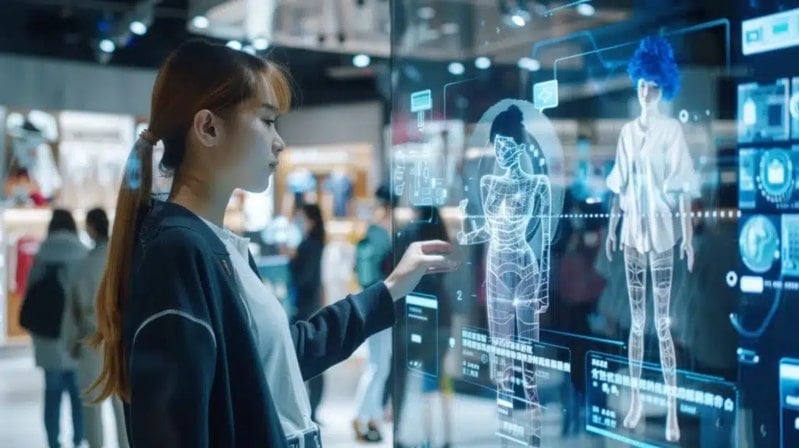
How can businesses deliver exceptional customer service in today's fast-paced world? Artificial intelligence offers a powerful solution for transforming customer interactions. This article explains how AI creates smarter service and redefines the entire customer experience.
Defining AI in the Customer Service Context
Artificial intelligence in customer service refers to technologies that simulate human intelligence. These systems handle tasks like answering questions and analyzing sentiment. This creates a foundation for more efficient and responsive support.
Machine learning algorithms allow these systems to improve from data over time. They identify patterns in customer behavior and past inquiries. This continuous learning is key to developing a truly smarter service model.
The context involves integrating AI tools with existing support channels. This includes phone systems, live chat, and email management platforms. The goal is a unified and intelligent support ecosystem.
Core AI Technologies Driving Smarter Customer Experiences
Several AI technologies are at the heart of this transformation. Natural Language Processing (NLP) enables machines to understand and respond to human language with remarkable accuracy. It allows chatbots and virtual agents to interpret customer intent and reply naturally, making interactions feel conversational rather than robotic.
Machine Learning (ML) plays an equally important role by identifying patterns in customer behavior and predicting what users might need next. For instance, an AI system can recognize when a shopper abandons a cart and automatically send a message offering help or a discount.
Sentiment Analysis helps companies read emotional cues—detecting frustration, confusion, or satisfaction from text or voice interactions. This allows customer service systems to prioritize unhappy customers or alert human agents when empathy is needed.
Transforming Key Touchpoints of Customer Interaction
AI has enhanced nearly every point of customer engagement. Chatbots are now capable of managing large volumes of requests simultaneously, available 24/7 to answer common questions without human intervention. In industries like retail and banking, these bots drastically reduce wait times and improve customer satisfaction.
Voice assistants, powered by speech recognition and NLP, let users interact through natural conversation. Customers can now track orders, pay bills, or troubleshoot devices simply by speaking.
In email and messaging systems, AI automates responses while ensuring a personalized tone, analyzing previous interactions to adapt its communication style. Recommendation engines, often used in e-commerce and streaming services, analyze customer preferences to suggest products or content that perfectly match individual tastes.
The Benefits of AI-Enhanced Customer Service
The benefits include major gains in operational efficiency and cost reduction. AI handles a high volume of requests simultaneously. This lowers support costs while maintaining service quality.
Challenges involve the initial investment and integration with legacy systems. Ensuring the AI understands company-specific terminology is also difficult. A clear implementation strategy is essential for success.
Another key benefit is the enrichment of the overall customer experience. Personalized recommendations and proactive support make interactions smoother. This builds stronger relationships between brands and their clients.
Balancing Automation with Human Empathy
Despite its advantages, AI cannot completely replace human connection. Empathy, emotional understanding, and creative problem-solving remain essential elements of customer service. The best systems are those that blend both—where AI handles efficiency, and humans deliver warmth.
Hybrid models are becoming the norm. AI manages the initial interaction, filters routine issues, and gathers context before transferring complex cases to human agents. This approach ensures customers get quick answers when possible, while still receiving human attention when it truly matters.
Future Trends in AI and Customer Service
Looking ahead, AI will make customer experience more predictive, personalized, and immersive. Future systems will combine real-time analytics with emotional intelligence to anticipate needs before they arise.
AI may soon collaborate with augmented reality (AR) and virtual assistants, allowing customers to receive visual support or interactive troubleshooting. In e-commerce, predictive AI will create "zero-click" experiences—where the system automatically delivers what the customer is likely to need next.
Conclusion: Embracing the AI Evolution
Artificial intelligence is fundamentally changing how companies interact with their customers. It enables more efficient, personalized, and proactive support. Adopting these tools is no longer optional for market leaders.
The journey toward a smarter service model requires careful planning and execution. Businesses must focus on a strategy that enhances human agents, not replaces them. The goal is a powerful synergy between people and technology.
Forward-thinking organizations are already reaping the rewards of AI integration. They deliver superior customer experiences that build lasting brand loyalty. The future of customer service is intelligent, responsive, and deeply connected.
 Unlock the Full Potential of Your AI Assistant With These Smart Uses
- AI Assistants for Beginners: Learn the Basics One Step at a Time
- Think You Know AI Assistants? These Capabilities May Surprise You
- How Medical Software Is Changing Daily Healthcare Experiences in 2026
- Remote Control Systems 2026: Innovations, Industrial Applications, and Future Trends





- Everything Else
Unlock the Full Potential of Your AI Assistant With These Smart UsesMany users still approach AI virtual assistants as if they were just quick-answer tools for simple chores. In reality, current assistants can do far more. They can support planning, writing, analysis, coordination, and day-to-day decision-making in ways that affect both work and personal routines. This guide looks at what these assistants can truly do, how to get stronger results from them, and why they are becoming a bigger part of modern life.- Everything Else
AI Assistants for Beginners: Learn the Basics One Step at a TimeAI assistants are no longer niche experiments reserved for engineers and labs. They now appear in the everyday workflows of students, employees, makers, and entrepreneurs. Whether the task involves drafting text, gathering information, generating visuals, or supporting decisions, these systems are changing how people approach both efficiency and imagination.- AI
Think You Know AI Assistants? These Capabilities May Surprise YouMany people still use AI assistants the way they use a timer or calculator: for small, fast requests. That view misses how capable these systems have become. Modern assistants can organize information, connect tools, complete layered tasks, and support both home and work routines. When set up well, they become less like a novelty and more like a practical operating layer for daily life.- Health
How Medical Software Is Changing Daily Healthcare Experiences in 2026In 2026, the push for smarter medical software across healthcare is stronger than at any previous point. These digital systems help organizations run more smoothly, handle patient information with greater accuracy, and stay aligned with changing compliance standards. Whether it is billing platforms that speed up claims processing or electronic records that strengthen coordination between clinicians, medical software covers a broad set of tools that support providers in meaningful ways. Telemedicine platforms are also reshaping access to treatment, especially for people living far from major care centers, proving that software now sits at the center of modern healthcare services.- AI
Remote Control Systems 2026: Innovations, Industrial Applications, and Future TrendsAs demand for operational effectiveness and safety grows, remote control systems continue to evolve rapidly in 2026. It's fundamental to grasp the latest breakthroughs, integration expenses, and value benefits to make informed decisions about these cutting-edge technologies without promotional bias.
- A Guide of Waifu Generators How They Work, Their Uses, and the Future You Need in 2025
- How Gesture-Based Access Systems Improve Safety, Efficiency, and User Experience
- A Beginner's Guide to Building a Career in 3D Character Animation
- How to Choose the Right Forklift Hire for Your Business
- Save Big on the 2025 Hyundai Palisade: Tips, Deals, and Buying Secrets
- How Artificial Intelligence Is Shaping the Future of Customer Engagement