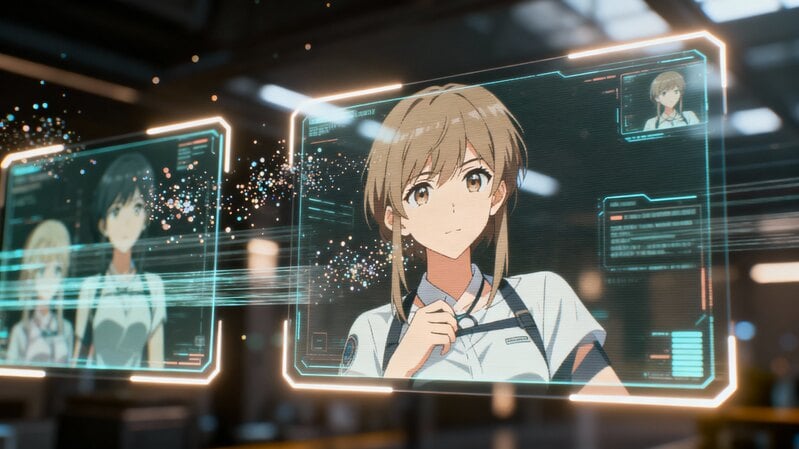
If you have ever been fascinated by anime art and wondered how AI can create stunning, original characters in seconds, waifu generators may have already caught your attention. These tools blend art, data, and machine learning to design personalized anime-style characters with remarkable accuracy and creativity.
What Is a Waifu Generator
A waifu generator is an AI-powered tool that creates original anime-style characters. These systems analyze vast datasets of existing artwork to learn artistic styles. They then produce new, unique character illustrations based on user input.
Users can often specify traits like hair color, clothing, and personality. The generator synthesizes these elements into a cohesive visual design. This process combines artistic principles with machine learning algorithms.
Modern generators have evolved from simple randomizers to complex systems. They now offer detailed control over character appearance and attributes. This technology represents a significant advancement in procedural content creation.
How Waifu Generators Work
To understand waifu generators, it helps to break down their process.
-
Data Collection: Thousands of anime-style images are collected, labeled, and standardized. These datasets teach the AI what visual elements define anime aesthetics.
-
Model Training: Using deep learning, the AI learns to distinguish and replicate stylistic features such as line thickness, shading, proportions, and color harmony.
-
Image Generation: When a user enters a prompt, the model interprets it using text-to-image algorithms. The AI then produces a visual output by sampling from what it learned during training.
-
Refinement and Upscaling: Many platforms use post-processing to enhance image resolution and fix inconsistencies, resulting in polished, ready-to-use artwork.
Diffusion models, like those used in Waifu Diffusion, progressively refine random noise into a coherent image, offering remarkable flexibility and control. In contrast, GAN-based models, like those powering Waifu Labs, involve two neural networks: a generator that creates images and a discriminator that judges them, continuously improving their realism.
Understanding Generator Mechanisms
Most systems use generative adversarial networks for image synthesis. This involves two neural networks competing against each other. One generates images while the other evaluates their quality.
The training process requires extensive datasets of anime artwork. These datasets teach the AI about common artistic conventions and styles. Quality and diversity of training data directly impact output variety.
User interfaces typically include sliders, text prompts, or template selections. These inputs guide the AI in producing desired character features. The system translates parameters into visual attributes through learned patterns.
Benefits and Implementation Challenges
These tools significantly reduce the time needed for character design. They enable rapid iteration and exploration of different visual concepts. This efficiency benefits professional workflows and personal projects alike.
However, quality consistency remains a challenge for some systems. Output may vary significantly between generations or require multiple attempts. Users must often refine their input parameters through trial and error.
Ethical considerations include copyright and originality of generated content. The training data's provenance and output ownership require careful examination. These issues continue to evolve alongside the technology itself.
Common Uses of Waifu Generators
Waifu generators have evolved beyond mere novelty tools. Their versatility has made them valuable across several industries and communities.
-
Personal Character Creation and Fan Art
Many users generate waifus for personal enjoyment, creating unique avatars or fan art for online profiles, digital storytelling, or social media. -
Gaming and Visual Novels
Indie game developers use waifu generators to prototype characters, reducing the time and cost of concept design. -
NFTs and Virtual Identities
In the blockchain world, AI-generated waifus have been turned into NFTs or used as digital companions for metaverse environments. -
Streaming and Virtual YouTubers (VTubers)
AI-generated characters often serve as the foundation for VTuber avatars, combining generated art with motion capture to create virtual entertainers.
The Future of Waifu Generators
Advancements will likely focus on increased customization and interactivity. Future systems may offer real-time editing and more nuanced control over details. Integration with other creative software represents another growth area.
We anticipate improvements in character consistency across different poses. Systems may better maintain core attributes while generating varied expressions and actions. This will enhance their utility for animation and game development.
Ethical frameworks and content guidelines will continue to develop. The community will establish best practices for training data and output usage. These standards will help ensure responsible technology adoption.
Conclusion
Waifu generators embody the convergence of art, technology, and imagination. They allow anyone to bring anime-inspired characters to life with a few keystrokes, offering opportunities for creativity, storytelling, and design. Yet, as they continue to evolve, they also challenge our notions of authorship, originality, and beauty. Whether used for personal expression or professional development, waifu generators are shaping the landscape of digital creativity—and their future will likely blur the boundaries between human and artificial artistry even further.
 Unlock the Full Potential of Your AI Assistant With These Smart Uses
- AI Assistants for Beginners: Learn the Basics One Step at a Time
- Think You Know AI Assistants? These Capabilities May Surprise You
- How Medical Software Is Changing Daily Healthcare Experiences in 2026
- Remote Control Systems 2026: Innovations, Industrial Applications, and Future Trends

- Everything Else
Unlock the Full Potential of Your AI Assistant With These Smart UsesMany users still approach AI virtual assistants as if they were just quick-answer tools for simple chores. In reality, current assistants can do far more. They can support planning, writing, analysis, coordination, and day-to-day decision-making in ways that affect both work and personal routines. This guide looks at what these assistants can truly do, how to get stronger results from them, and why they are becoming a bigger part of modern life.- Everything Else
AI Assistants for Beginners: Learn the Basics One Step at a TimeAI assistants are no longer niche experiments reserved for engineers and labs. They now appear in the everyday workflows of students, employees, makers, and entrepreneurs. Whether the task involves drafting text, gathering information, generating visuals, or supporting decisions, these systems are changing how people approach both efficiency and imagination.- AI
Think You Know AI Assistants? These Capabilities May Surprise YouMany people still use AI assistants the way they use a timer or calculator: for small, fast requests. That view misses how capable these systems have become. Modern assistants can organize information, connect tools, complete layered tasks, and support both home and work routines. When set up well, they become less like a novelty and more like a practical operating layer for daily life.- Health
How Medical Software Is Changing Daily Healthcare Experiences in 2026In 2026, the push for smarter medical software across healthcare is stronger than at any previous point. These digital systems help organizations run more smoothly, handle patient information with greater accuracy, and stay aligned with changing compliance standards. Whether it is billing platforms that speed up claims processing or electronic records that strengthen coordination between clinicians, medical software covers a broad set of tools that support providers in meaningful ways. Telemedicine platforms are also reshaping access to treatment, especially for people living far from major care centers, proving that software now sits at the center of modern healthcare services.- AI
Remote Control Systems 2026: Innovations, Industrial Applications, and Future TrendsAs demand for operational effectiveness and safety grows, remote control systems continue to evolve rapidly in 2026. It's fundamental to grasp the latest breakthroughs, integration expenses, and value benefits to make informed decisions about these cutting-edge technologies without promotional bias.
- A Guide of Waifu Generators How They Work, Their Uses, and the Future You Need in 2025
- How Gesture-Based Access Systems Improve Safety, Efficiency, and User Experience
- A Beginner's Guide to Building a Career in 3D Character Animation
- How to Choose the Right Forklift Hire for Your Business
- Save Big on the 2025 Hyundai Palisade: Tips, Deals, and Buying Secrets
- How Artificial Intelligence Is Shaping the Future of Customer Engagement