AI assistants are no longer niche experiments reserved for engineers and labs. They now appear in the everyday workflows of students, employees, makers, and entrepreneurs. Whether the task involves drafting text, gathering information, generating visuals, or supporting decisions, these systems are changing how people approach both efficiency and imagination.

This article takes a grounded, practical look at today's AI tools. Rather than repeating excitement or slogans, it examines how these systems function, where they deliver the most value, how major tools differ from one another, and how people can use them with care and good judgment in daily situations.
How AI Became Part of Everyday Applications
AI tools did not suddenly appear in mainstream life. Their growth is tied to better hardware, wider access to enormous datasets, and major progress in machine learning systems. In just a few years, AI has moved from an invisible feature inside software to a direct, user-facing experience.
What separates current AI tools from older software is adaptability. Conventional programs rely on predefined instructions. AI systems, instead, react to natural language. Users do not have to memorize technical syntax. They can simply describe the result they want.
That change has made advanced software easier to approach. People without formal technical training can now handle work that once depended on specialized expertise, including building organized drafts or producing initial visual ideas.
A Simple View of How AI Assistants Operate
At a basic level, AI tools run on trained models. Those models absorb patterns from very large collections of text, images, and structured material. When a user enters a prompt, the system is not retrieving one perfect response. It is generating an answer by predicting what best fits those learned patterns.
That is one reason these tools perform strongly on language tasks. They detect how words and phrases commonly connect and then produce responses that sound fluent and coherent. Still, this is different from human understanding or deep comprehension.
This weakness helps explain why AI can sometimes deliver inaccurate information with confidence. The system is not verifying reality; it is estimating probability. Users who understand this are usually better prepared to use AI carefully and effectively.
Main Types of AI Tools People Use Today
AI tools can be divided into several broad groups according to what they are designed to do. Each group fits different goals, and recognizing those differences helps people avoid poor expectations and unnecessary disappointment.
Writing-focused AI tools are the most common category. They support drafting, revising, condensing, clarifying, and brainstorming. Well-known examples include ChatGPT, Claude, and Gemini.
These platforms are widely used across schools, content work, and professional environments. They are especially useful when the job involves explaining ideas, reorganizing material, or changing tone for a particular audience.
Other AI tools are built more specifically for research and information gathering. Instead of emphasizing creativity, they focus more on reliability, readable summaries, and awareness of source material.
Services such as Perplexity present condensed explanations while also guiding users to original references. That makes them useful for academic work, preliminary reading, and verification tasks.
These systems become especially important when confidence in sources matters more than polished prose or expressive style.
There are also visual AI tools that create images, illustrations, and design directions from written descriptions. They are now common in branding, promotion, and early-stage creative work.
Popular options in this space include Midjourney and DALL·E.
Such tools allow people without formal design training to turn ideas into visible concepts quickly. Even so, they are usually strongest for exploration and inspiration rather than for finished, final-quality production.
How People in Different Roles Apply AI
AI tools are not adopted in exactly the same way by every user. Their usefulness depends strongly on context, priorities, and the kind of outcome someone needs.
Students often treat AI as a study partner. They use it for explanations, condensed notes, and sample questions. When handled responsibly, AI can make difficult subjects easier to grasp and help learners study more efficiently.
Professionals often rely on AI to reduce repetitive administrative effort. Typical uses include preparing emails, summarizing discussions, and arranging scattered information. This frees more time for judgment, planning, and higher-level decisions.
Small business owners use AI to stretch limited time and staffing. It can assist with promotional writing, customer messages, and idea development. For lean teams, AI often works best as a force multiplier rather than a substitute for people.
Why AI Tools Are So Useful
AI tools are particularly strong at work that involves patterns, repetition, and organized structure. They can move through large volumes of text at high speed and reshape information into forms that are easier to use.
Some of their most valuable advantages stand out clearly in everyday use.
They save time on recurring tasks that would otherwise consume attention and energy.
They help maintain a steady tone and consistent formatting across many outputs.
They can produce several alternate versions of the same idea within seconds.
They also provide useful support during brainstorming and early ideation.
Because of these strengths, AI tools tend to deliver the most value when they serve as assistants rather than as independent authorities.
Important Limits and Risks to Keep in Mind
For all their usefulness, AI tools come with serious constraints. They do not possess lived experience, emotional awareness, or human judgment. They may also reproduce biases present in their training material and can struggle with subtle ethical situations.
A further problem is excessive dependence. If people accept AI-generated output without checking it, mistakes can spread fast. The danger becomes much greater in areas such as education, medicine, and financial decision-making.
Recognizing these limits is not a negative attitude toward AI. It is a basic condition for using these systems responsibly.
Matching the Tool to the Job
The best way to choose an AI tool is to begin with the specific task you need to complete.
For writing, rewriting, and explanation, tools like ChatGPT or Claude are often effective choices.
For research, source-based inquiry, and factual exploration, Gemini or Perplexity may be better suited.
For image generation and visual concept work, Midjourney or DALL·E usually make more sense.
Many skilled users do not depend on just one platform. They combine tools, such as researching with Perplexity, drafting with ChatGPT, and generating visuals with Midjourney. That layered workflow often produces stronger results than using a single system for everything.
Developing Skill With AI Over Time
Using AI well is a learned ability rather than an inborn gift. Better instructions usually lead to better responses. That is why the quality of the prompt has such a strong influence on the final result.
Effective prompts usually include context, purpose, and the preferred format of the answer. Over time, users discover that even small wording changes can noticeably improve or weaken the output.
More structured learning, including short training programs or guided exercises, often helps people build this skill faster than relying only on trial and error.
Using AI With Ethics, Caution, and Accountability
AI tools bring important ethical concerns with them. In schools, relying on AI instead of doing original work may violate academic expectations. In business settings, entering confidential information into AI systems can create real privacy and security issues.
Responsible use requires openness, awareness of data exposure, and ongoing human review. It also requires remembering that AI-generated output represents probability and pattern matching, not guaranteed truth.
Confidence in AI tools tends to grow when people understand both what these systems can do well and where they can go wrong.
Closing Perspective
AI tools are changing how people study, work, and create. They are quick, easy to access, and growing more capable over time. When used with care, they reduce friction and make new kinds of work possible.
The key skill is not learning every platform in detail, but knowing how to select, direct, and supervise these tools. When that happens, AI is far more likely to become a dependable assistant than an unpredictable source of risk.
 Unlock the Full Potential of Your AI Assistant With These Smart Uses
- Think You Know AI Assistants? These Capabilities May Surprise You
- How Medical Software Is Changing Daily Healthcare Experiences in 2026
- Remote Control Systems 2026: Innovations, Industrial Applications, and Future Trends
- How AI Addresses Disruption Across Inventory and Logistics Networks




- Everything Else
Unlock the Full Potential of Your AI Assistant With These Smart UsesMany users still approach AI virtual assistants as if they were just quick-answer tools for simple chores. In reality, current assistants can do far more. They can support planning, writing, analysis, coordination, and day-to-day decision-making in ways that affect both work and personal routines. This guide looks at what these assistants can truly do, how to get stronger results from them, and why they are becoming a bigger part of modern life.- AI
Think You Know AI Assistants? These Capabilities May Surprise YouMany people still use AI assistants the way they use a timer or calculator: for small, fast requests. That view misses how capable these systems have become. Modern assistants can organize information, connect tools, complete layered tasks, and support both home and work routines. When set up well, they become less like a novelty and more like a practical operating layer for daily life.- Health
How Medical Software Is Changing Daily Healthcare Experiences in 2026In 2026, the push for smarter medical software across healthcare is stronger than at any previous point. These digital systems help organizations run more smoothly, handle patient information with greater accuracy, and stay aligned with changing compliance standards. Whether it is billing platforms that speed up claims processing or electronic records that strengthen coordination between clinicians, medical software covers a broad set of tools that support providers in meaningful ways. Telemedicine platforms are also reshaping access to treatment, especially for people living far from major care centers, proving that software now sits at the center of modern healthcare services.- AI
Remote Control Systems 2026: Innovations, Industrial Applications, and Future TrendsAs demand for operational effectiveness and safety grows, remote control systems continue to evolve rapidly in 2026. It's fundamental to grasp the latest breakthroughs, integration expenses, and value benefits to make informed decisions about these cutting-edge technologies without promotional bias.- AI
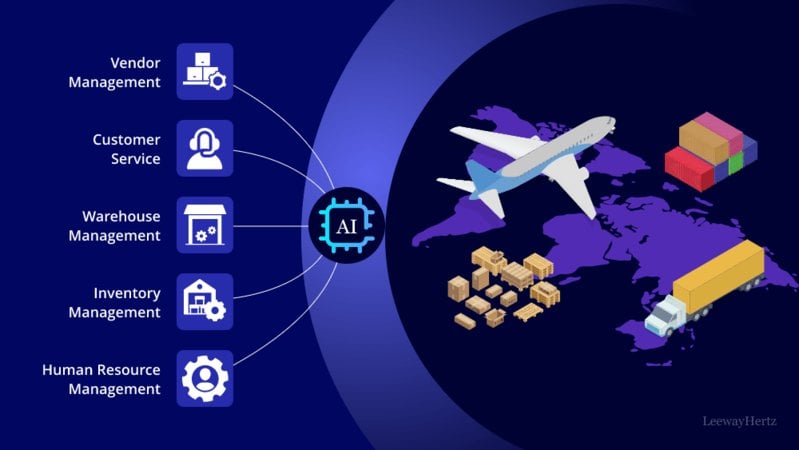
How AI Addresses Disruption Across Inventory and Logistics NetworksYou are managing supply chains in an environment where disruption, inventory imbalance, and logistics uncertainty occur simultaneously. Artificial intelligence provides a structured way to analyze risk, optimize inventory, and coordinate logistics decisions with precision, helping you maintain stability, service levels, and cost control.
- A Guide of Waifu Generators How They Work, Their Uses, and the Future You Need in 2025
- How Gesture-Based Access Systems Improve Safety, Efficiency, and User Experience
- A Beginner's Guide to Building a Career in 3D Character Animation
- How to Choose the Right Forklift Hire for Your Business
- Save Big on the 2025 Hyundai Palisade: Tips, Deals, and Buying Secrets
- How Artificial Intelligence Is Shaping the Future of Customer Engagement